


Avakin Life - 3D Virtual World
Lockwood Publishing Ltd
I approached Avakin Life as a social role-playing game rather than a conventional adventure with a fixed campaign. Its main appeal is the feeling of stepping into a shared 3D space, creating a character, meeting other players, and deciding what kind of virtual routine you want to build. That makes it an unusual choice for anyone who wants conversation and self-expression to matter as much as traditional objectives.
After spending time with it, my impression is mixed in a useful way. There is a lot to explore if you enjoy styling an avatar, arranging a personal space, visiting social locations, and chatting at your own pace. At the same time, the experience can feel less satisfying if you expect a tightly directed role-playing game, a deep combat system, or a clear end goal. This is best understood as a persistent social world with role-playing elements, not as a replacement for a story-driven RPG.
How Avakin Life feels in its current form
The game is free to download and comes from Lockwood Publishing Ltd, a developer that has kept the project active since its release on December 10, 2013. Its long presence helps explain the size of the world and the amount of attention around it: the Android listing shows over 100 million installs, an average rating of 3.9 from around 3.4 million ratings, and roughly 157 thousand written reviews. Those figures suggest a large, established audience, although they should not be mistaken for a guarantee that every player will enjoy the same style of play.
Related News
Hero Wars: Alliance – Unleash Strategy and Magic

Why Masha and the Bear Pizza Maker Is a Cultural Phenomenon

Why Super Stylist Fashion Makeover Is a Must-Play for Fashion Lovers
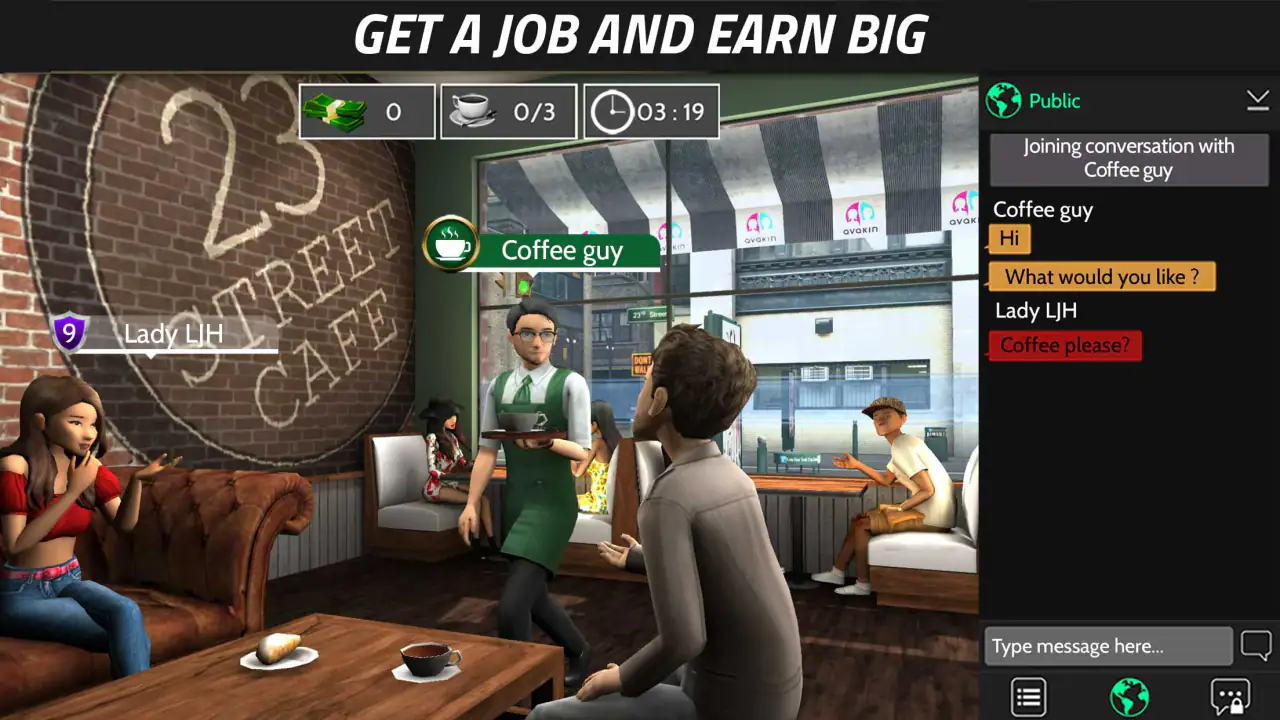
The starting point is personal identity. You create and adjust an avatar, then use that character as your presence in the world. Clothing, appearance, surroundings, and the way you interact with other people all contribute to the experience. I found that the game becomes more interesting once I stopped looking for a conventional mission structure and started treating it like a place to visit for a particular purpose: a quick conversation, a change of outfit, a look at a social location, or a longer session spent making the avatar and home feel more personal.
That flexibility is both the strongest feature and the biggest source of uncertainty. A player who enjoys choosing a look and talking with strangers may find plenty to do without needing a traditional objective. Someone who needs constant progression, difficult challenges, or a strong narrative may wonder what they are supposed to accomplish after the novelty of the virtual world fades.
Related News

Why WhatsApp Messenger Still Makes Everyday Communication Feel Easy

Jurassic World: The Game Is the Better Dino Tycoon for Strategic Players

Threads in Real Life: Who Should Join, Lurk, or Leave

How SHEIN Turned Shopping Into an Endless Content Feed

How to Make Fortnite Feel Smarter on Mobile

Should You Switch to Microsoft Outlook on Mobile?
The Teen content rating is important here. This is a public social environment, so I would not treat it like a private dress-up game for young children. Parents should discuss online interaction and spending before allowing access, while adult players should still use sensible boundaries when chatting with people they do not know. The social nature is central to the product, not a small extra attached to a single-player game.
The first session: what matters immediately
My advice for a first session is to avoid spending too quickly. The game presents a large world and a strong focus on appearance, which can make new players feel that they need to improve their avatar immediately. I would first learn how movement, social spaces, customization, and the general economy fit together. A few minutes of observation can prevent the common mistake of using limited resources on an item that looked attractive in isolation but does not suit the style you actually want.
I also recommend deciding what kind of player you are before judging the game. If you want a social hangout, look for places where conversation feels comfortable. If you prefer creative customization, spend time with the avatar and personal-space options. If you are mainly searching for role-playing depth, test the world with realistic expectations. The title offers role-play through identity and social behavior more than through complex character builds or a carefully authored plot.
Gallery
Why the social design works
The most convincing part of the experience is the way small choices combine. A character is not just a collection of cosmetic selections; it becomes a way to signal personality. The same is true of the spaces you visit and the people you choose to talk with. I found that a short visit could feel worthwhile when I had a simple intention, such as finding a different look or joining a conversation, even without completing a formal objective.
This makes the game a reasonable option for players who enjoy low-pressure interaction. It can fit into a short break because there is no requirement to finish a long chapter before leaving. It can also support a longer session when you are in the mood to adjust details, explore several locations, and socialize. That range is more important than it sounds: many role-playing games are built around commitment, while this one is built around returning whenever you feel like inhabiting the world.
There is a trade-off. A social world depends on the quality of the people you encounter, and that quality can vary. A lively visit may make the game feel welcoming, while a quiet or uncomfortable session can make the same locations feel empty. The game gives you a setting for interaction, but it cannot guarantee that every conversation will be meaningful.
What the current version means for players
The current version is 2.017.02, which places the game in a mature stage rather than at the beginning of its life. I see that maturity in the broad identity of the product: it is not trying to become a conventional combat-focused RPG. Its continuing value comes from the social world, personal presentation, and the ability to make the experience your own. Players who return after time away should therefore look for refinement and fresh reasons to engage rather than expecting the entire foundation to change.
For an existing player, the practical effect is that familiarity is useful. You already know how you prefer to present your avatar, which types of spaces interest you, and whether you enjoy conversation or customization more. Returning with a specific goal makes the experience feel more focused. For example, I would choose one session for wardrobe planning, another for visiting social areas, and another for catching up with familiar contacts instead of trying to do everything at once.
New players may experience the opposite problem: too many possibilities without a clear order. I would create a personal routine. Start by learning the basic movement and interaction controls, then spend a small amount of time on appearance, visit a few spaces, and only afterward decide whether the social side or the customization side deserves more attention. This approach makes the world easier to read and reduces the feeling that you are wandering through a catalogue.
Free access and the spending decision
There is no purchase price to begin, but optional in-app purchases range from $0.49 to $189.99 per item. That range deserves serious attention because the game’s most visible pleasures are connected to appearance and personal expression. When a title places customization at the center, paid items can feel more tempting than they would in a game where cosmetics are peripheral.
I would treat purchases as a budget decision, not as a requirement for discovering whether the game suits you. Play first, identify the parts you actually use, and avoid buying simply because an item creates a temporary sense of urgency. A useful test is to ask whether the purchase improves a routine you already enjoy. If you have not yet found a social space or style that keeps you coming back, spending more is unlikely to solve that problem.
This is also where Avakin Life differs from many traditional free role-playing games. In a combat RPG, purchases may be judged against progression, equipment, or competitive advantage. Here, the emotional pull is more personal: a look, a room, or a way of presenting yourself. That can be enjoyable, but it also means the value is subjective. I would recommend extra caution for younger users and shared devices, especially because the content rating is Teen and the optional items reach a high upper price.
Three practical ways to get more from it
First, use themed sessions instead of aimless browsing. Choose a simple idea for your avatar or surroundings and build around it. This turns a large amount of customization into a manageable creative task. It also helps you notice which items genuinely fit your preferences rather than collecting disconnected pieces.
Second, separate social time from shopping time. When I combine both, it is easy to lose track of why I opened the game. Visiting a space to talk and visiting one to compare styles are different activities, and treating them separately makes the session less tiring. It also creates a natural pause before any purchase, which is useful in a game with such a broad spending range.
Third, judge a location by the kind of interaction it encourages, not just by how attractive it looks. A visually appealing space is not automatically a good place for conversation. If your goal is to meet people, stay long enough to see whether communication feels natural. If your goal is quiet customization, a busy social environment may be distracting. This small distinction makes the world feel more intentional.
Where it still falls short
The largest limitation is direction. Avakin Life can provide a setting and tools for self-expression, but it does not replace the satisfaction of a strong plot, carefully designed quests, or a character build that changes how you play. If you usually choose games such as story-led role-playing adventures, you may miss a sense of consequence and progression.
It can also be difficult to evaluate the experience through a single short visit. The game’s appeal depends on whether you enjoy returning to a social space and making your own reasons to stay. Players who prefer immediate rewards may find the open-ended structure slow. Players who dislike chatting with strangers may only experience the customization layer and may decide that it is not substantial enough on its own.
Privacy and social comfort are practical concerns as well. I would avoid sharing personal information, move away from conversations that become uncomfortable, and use the available reporting or blocking tools when needed. Those habits are not optional extras in a public virtual world; they are part of using it responsibly. The Teen rating reinforces the need for awareness rather than assuming every interaction is harmless.
Device compatibility is fairly broad on Android, with a minimum operating-system requirement of Android 5.1. That makes the entry barrier lower for people with older phones, although the actual comfort of a 3D social world can still depend on the device and connection. I would keep expectations realistic on older hardware: a game built around a large visual environment may feel less comfortable than a lightweight chat application, even when the operating system technically meets the requirement.
Who should try it, and who should skip it
I would recommend it to players who enjoy avatar fashion, virtual interiors, relaxed exploration, and conversations that are not tied to a competitive objective. It is especially suitable if you like games that let you decide what a successful session looks like. A person who wants a digital place to meet friends, experiment with identity, or pass time through light social activity may find the format appealing.
I would be more cautious recommending it to someone seeking a deep role-playing system. If your ideal game includes tactical battles, a long campaign, complex equipment choices, or a clear chain of missions, this is probably the wrong first choice. A conventional RPG will give you stronger structure, while a dedicated messaging or voice-chat app may be better if conversation is your only priority and you do not care about a 3D avatar or virtual setting.
It is also not my first recommendation for anyone who finds cosmetic spending stressful. Because personal presentation is so visible, the temptation to compare what you have with what you could buy may undermine the relaxed atmosphere. The free entry point is useful, but it does not remove the need for self-control.
A realistic everyday scenario
Imagine finishing work or school with only twenty minutes available. You open the game not to complete a major quest, but to change your avatar’s look, visit a familiar social area, and talk for a while. If the conversation is enjoyable, the short session has a clear purpose. If the space feels quiet, you can leave without losing progress in a long campaign. That low commitment is one of the strongest reasons to keep the game installed.
On a weekend, the same player might spend longer creating a particular style, arranging a personal area, and visiting several locations. The experience expands because the player supplies the theme and pace. This is a good example of the game’s unusual strength: it can be casual without being entirely empty, provided you enjoy setting your own goals.
The opposite scenario is just as realistic. A player opens it expecting a dramatic role-playing adventure, finds no immediate story that matches that expectation, notices the emphasis on social interaction and customization, and leaves disappointed. That is not necessarily a failure of the game; it is a mismatch between the product’s design and the player’s reason for downloading it.
What I would watch before committing
I would pay attention to how consistently the social side fits your personality. Do you enjoy returning to familiar spaces, or do you need a new challenge each time? Do you like styling an avatar enough to make it a regular activity? Can you enjoy a session without feeling pressure to buy something? Your answers matter more than the large install figure or the average rating, because this is a preference-driven experience.
I would also watch how the current version feels on your particular phone, especially if you use older hardware. Compatibility on paper is helpful, but comfort comes from smooth movement, readable visuals, and controls that do not become tiring. Since the game is free to start, testing it directly is more sensible than trying to predict the experience from screenshots.
Finally, I would watch your own boundaries around communication. The best version of this game is social, but social does not have to mean indiscriminate. Choose conversations carefully, protect personal details, and leave spaces that make you uncomfortable. That approach lets the virtual world remain a leisure activity instead of turning it into an obligation.
My final view is that Avakin Life succeeds when I use it as a flexible social role-playing space, not when I demand that it behave like a traditional RPG. Its long-running presence, large audience, free entry, and focus on identity give it a clear place among virtual-world games. The limitations are equally clear: open-ended play can feel directionless, social encounters vary, and optional purchases require discipline. If you want a customizable 3D place to visit and share with others, it is worth trying; if you want a structured adventure, choose a dedicated RPG instead.
FAQs for Avakin Life - 3D Virtual World
What is Avakin Life and how does it work?
Avakin Life is a 3D virtual world app where users can create and customize their own avatars, interact with other players, and explore various virtual environments. The app offers socializing opportunities through chat, parties, and events. It also includes customization features for clothing, accessories, and home decoration, allowing for a personalized gaming experience.
Is Avakin Life free to play, and are there in-app purchases?
Avakin Life is free to download and play. However, it includes in-app purchases that provide additional content and customization options. Players can buy Avacoins and Gems, which are used to purchase clothing, furniture, and other virtual items. While in-app purchases enhance the experience, they're not mandatory to enjoy the game.
What devices are compatible with Avakin Life?
Avakin Life is available on both Android and iOS platforms. It requires a device running Android 5.0 or later, or iOS 10.0 or later. The game is optimized for smartphones and tablets, ensuring a smooth gameplay experience. Users should ensure their device meets these requirements for optimal performance.
How can I ensure a safe experience in Avakin Life?
Avakin Life includes several safety features to protect users. Players can block or report others if they encounter inappropriate behavior. The app also has privacy settings to control who can interact with your avatar. It's important for players, especially younger audiences, to be aware of these features and use them to maintain a safe gaming environment.
Can I play Avakin Life offline?
Avakin Life requires an internet connection to play, as it is a multiplayer online game. The game’s social and interactive features rely on connectivity, allowing users to engage with others in real-time. Therefore, a stable internet connection is necessary to fully enjoy the virtual world and its community aspects.
Pros
- Immersive 3D environments enhance user experience.
- Wide range of customization for avatars.
- Frequent updates bring new features and content.
- Engaging social interactions with global players.
- Various mini-games add to gameplay diversity.
Cons
- In-app purchases can be quite costly.
- Requires a stable internet connection.
- Loading times can be noticeably long.
- Occasional bugs disrupt gameplay experience.
- Notifications can be overwhelming at times.


